Car Dealer SVG Cut File Review
First Impressions: Bold, Clean, and Built for Branding
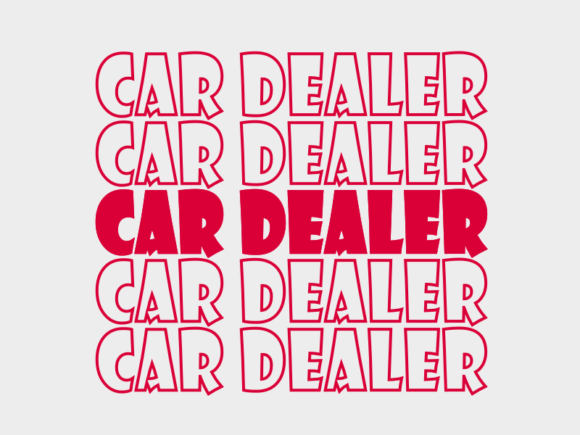
When I opened the Car Dealer SVG Cut File, my first thought wasn’t “cute” or “trendy”—it was “this belongs on a shop apron, a service counter banner, or a mechanic’s cap.” The design carries strong visual hierarchy: clean lines, confident letterforms, and balanced negative space. There’s no overworked detail—no tiny grilles, no fussy chrome highlights—just a straightforward, scalable emblem that reads instantly at 3 inches or 12 inches. That simplicity is its biggest strength for embroidery. It doesn’t try to be photorealistic; it leans into graphic clarity—and that translates directly into stitchable confidence.
A Real Project Test: Embroidering a Custom Tote for a Local Auto Shop
Last week, I used the Car Dealer SVG Cut File to create embroidered totes for a small-town auto repair boutique. Their branding is grounded—navy, silver, and white—with a no-nonsense voice. I converted the SVG into a machine embroidery design (using digitizing software with moderate fill stitch density and crisp satin-stitched outlines), then stitched it onto 14-oz cotton canvas. The result? Sharp, legible, and professional—not “handmade cute,” but “we know what we’re doing.” Customers noticed it immediately at the shop counter. One even asked where they could buy one. That’s the signal you want: the design supports the brand, not distracts from it.
Where It Shines—and Where It Needs Thought
The Car Dealer SVG Cut File works beautifully on structured, medium-weight fabrics: sweatshirt fleece, twill caps, denim tote bags, and cotton tea towels. Its bold shapes hold up well in fill stitch, and the spacing between letters avoids thread nesting—even at smaller sizes (3.5–4 inches wide). As an applique design, it’s equally effective: cut cleanly on a Silhouette or Cricut, then layer with contrasting fabric for a tactile, boutique-ready look.
But here’s where attention matters:
- Small hoop sizes: Avoid stitching it below 3 inches without simplifying internal details—tiny serifs or tight corners may not resolve cleanly on a 4x4 hoop.
- Stretchy or thin fabric: Use cutaway stabilizer underneath—especially for t-shirts or baby onesies. The design’s width can cause puckering if stabilization is light.
- Dark fabric: Test thread colors carefully. A bright silver or metallic gray thread pops better than white on navy or charcoal—and reads more authentically for automotive branding.
- Curved surfaces: On caps or curved pillow covers, reduce stitch density slightly and consider splitting the design across two smaller elements if the front panel is narrow.
What It Adds to Your Finished Product
This isn’t just decoration—it’s shorthand for credibility. When used on a custom embroidered patch for employee uniforms, the Car Dealer SVG Cut File signals competence and consistency. On a personalized gift—say, a baby onesie with “Future Mechanic” + the logo—it balances playfulness and professionalism. For Etsy sellers listing handmade products, it elevates perceived value: customers don’t see “a clipart file,” they see a cohesive, intentional design asset that fits real-world use.
It also strengthens brand continuity. If you’re designing a suite of shop merchandise—a mug, a keychain, a tote, and a cap—the Car Dealer SVG Cut File scales cleanly across all formats. That means your printable mockups stay accurate, your digital product previews look consistent, and your physical embroidery matches your online listings. That alignment builds trust, especially for small shop owners who rely on repeat local customers.
Designer Notes You’ll Actually Use
Before stitching your first piece, do these five things:
- Test on scrap fabric—same weight and weave as your final project—to check for pull, density, and edge definition.
- Review stitch density in your embroidery software. If the original digitization feels heavy, reduce fill stitch % by 5–8% for lightweight cotton or knits.
- Confirm hoop size compatibility. If you’re using a 5x7 hoop, verify the widest version of the Car Dealer SVG Cut File fits comfortably with 0.25" margin.
- Inspect small details in black-and-white mockups—especially letter spacing and terminal points. What looks clean on screen may blur when stitched.
- Check licensing before selling finished items or bundling the file into your own digital product. Since it’s listed under Print Templates and Graphics, confirm whether commercial embroidery rights are included—or if you need extended use permission.
Fabric & Context: Know When to Lean In—or Step Back
This design thrives in contexts where clarity trumps whimsy: service-based small businesses, trade shows, workshop signage, and branded staff wear. It’s less ideal for delicate nursery decor (think soft pastel baby blankets) or highly textured items like bouclé pillows—unless simplified and re-digitized with open stitch patterns.
I’ve tried it on brushed cotton tea towels—great contrast, excellent drape retention. Tried it on ribbed knit caps—needed minor contour adjustment and reduced underlay, but still held up. Tried it on a stretchy polyester blend t-shirt? Only with tear-away + cutaway combo stabilizer and reduced top tension. So yes—it’s versatile, but not universal. Respect the fabric, respect the stitch, and you’ll get reliable results.
Final Thought: A Workhorse Design, Not a Gimmick
The Car Dealer SVG Cut File won’t win awards for avant-garde illustration—but it’s exactly the kind of solid, adaptable design asset that keeps craft businesses running smoothly. It saves time on digitizing, reduces revision rounds with clients, and delivers consistent output across apparel, patches, and home goods. For embroidery designers building libraries, Etsy sellers curating niche bundles, or small shops launching branded merch—it’s not flashy, but it’s functional, trustworthy, and quietly effective. And in real-world making? That’s the highest compliment.