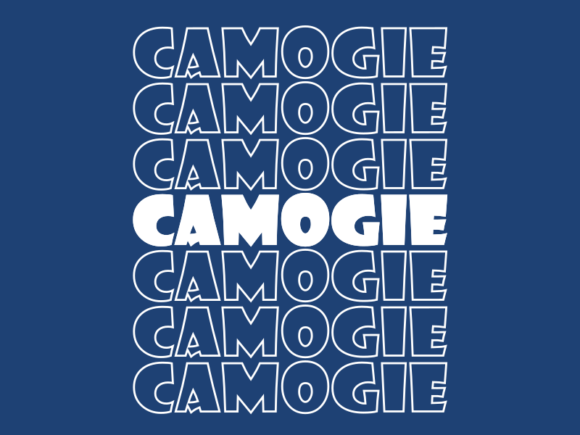
Camogie SVG Cut File Review
As someone who’s stitched hundreds of designs across apparel, home goods, and personalized gifts—everything from boutique baby onesies to holiday market tote bags—I opened the Camogie SVG Cut File expecting a clean, spirited emblem. What I found was exactly that: a bold, confident graphic rooted in tradition but built for modern making. It’s not just a silhouette or a stylized crest—it carries motion, rhythm, and subtle texture in its lines. That matters when you’re translating vector art into thread.
First Impressions: Energy, Clarity, and Craft Intent
The Camogie SVG Cut File lands with presence. Its composition balances negative space and strong contours—ideal for embroidery where stitch definition is non-negotiable. The central motif reads clearly at 3” wide (a common sweatshirt chest placement), but it also holds up beautifully scaled down to 1.75” for a cap front or baby bib. There’s no over-detailing: no fragile filigree, no micro-lettering, no overlapping layers that’d confuse an embroidery machine’s pathing logic. That’s a win—not every SVG file respects how real thread behaves.
I immediately pictured it on a heavyweight organic cotton tote bag for a local camogie club fundraiser. Not as a logo slapped on the corner, but centered, crisp, and slightly oversized—stitched in navy and white thread with a tight satin border and balanced fill stitch density. Customers would recognize it instantly, and it wouldn’t look like clip art once stitched.
Where It Shines: Real Projects, Real Fabric
This design thrives where clarity meets authenticity. On a midweight cotton sweatshirt? Excellent. The shape reads cleanly even after washing—no bleeding edges or stitch gaps. On a tea towel? Perfect. Its open structure avoids dense fill areas that stiffen woven linen or terry cloth. As a patch? Strong candidate—especially if backed with iron-on stabilizer and finished with a clean satin-stitched edge.
For Etsy sellers and small shop owners, the Camogie SVG Cut File is a smart addition to your digital embroidery file library because it bridges niche pride and broad appeal. It works for personalized gifts (think: embroidered nursery wall hangings with a camogie stick + shamrock motif), boutique branding (aprons for Irish bakeries, kitchen towels for heritage-themed shops), and even wedding favors—embroidered on linen napkins or mini pillow covers.
It also translates well into printable mockups. Since it’s a true SVG, I dropped it into my design workflow without distortion—scaled it to 4.5”, 2.25”, and 1.5” to preview across product types. No pixelation, no jagged edges. That reliability saves time when prepping listings or client proofs.
Where to Proceed Thoughtfully
Like any strong design, the Camogie SVG Cut File asks for intention—not caution. It’s not suited for ultra-fine details on stretchy fabric like jersey knits unless paired with cutaway stabilizer and reduced stitch density. On dark fabric, test thread contrast first: light grey or ecru can read softly next to black fleece; off-white or cream pops better. And while it scales gracefully, avoid going below 1.25” hoop size without checking how corners and curves hold up in stitch simulation—some vector subtlety gets lost in tiny satin stitch transitions.
Curved surfaces—like the front of a structured cap—demand extra attention. The design’s symmetry helps, but always run a test on scrap fabric mounted in the same hoop you’ll use. Likewise, layered garments (think: embroidered over a pocket or seam) need careful placement planning—the shape’s balance means it won’t visually “sink” if slightly off-center, but precision still pays off.
What It Adds to Your Finished Product
Stitching the Camogie SVG Cut File elevates perceived value. It doesn’t scream “digital download”—it reads as intentional, considered, handmade. That builds customer trust, especially for craft businesses selling on Etsy or at local markets. Buyers respond to confidence in line work and proportion, and this file delivers both.
For commercial embroidery projects, it supports brand consistency without feeling rigid. You can pair it with minimalist typography or let it stand alone—and it still feels complete. As a design asset, it’s versatile enough for seasonal updates (add a sprig of holly for Christmas, swap thread colors for St. Patrick’s Day) without needing a new file each time.
Practical Notes Every Embroidery Designer Should Run Through
- Test first—on scrap fabric matching your final project’s weight and stretch.
- Check thread color contrast across light and dark backgrounds before stitching the final piece.
- Review stitch density in your embroidery software—adjust if needed for fabric type (e.g., reduce fill density on lightweight cotton).
- Confirm hoop size compatibility—especially if using multi-position hoops or specialty frames.
- Inspect small details in digitized preview mode: corners, joins, and inner cutouts should be smooth, not jagged.
- Try black-and-white mockups to assess visual weight and readability at different sizes.
- Use appropriate stabilizer: tear-away for stable wovens, cutaway for knits or textured fabrics.
- Verify licensing before selling finished embroidered items or bundling the file in digital product kits.
The Camogie SVG Cut File isn’t flashy—but it’s dependable. It belongs in your working folder alongside your most-used applique designs and go-to satin-stitch motifs. It’s the kind of machine embroidery design that disappears into the product, letting the craftsmanship and meaning shine through. Whether you're embroidering for a community club, building a craft business, or creating heartfelt personalized gifts, this file earns its place—not as decoration, but as quiet, capable design.