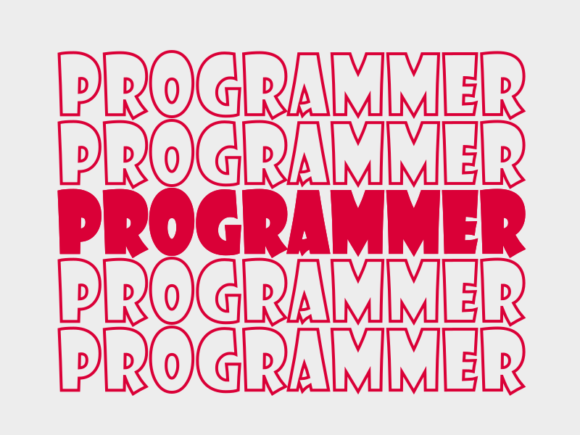
Programmer SVG Cut File: Graphics for Print Templates
First Impression: A Playful, Modern Graphic Design Asset with Unexpected Versatility
When I opened Programmer SVG Cut File, I expected technical motifs—brackets, code brackets, binary patterns—but what landed was something warmer: clean line art of a stylized laptop with subtle circuit-like flourishes, soft rounded corners, and balanced negative space. It reads as modern, friendly, and quietly intelligent—not cold or overly geeky. For a local business, that’s gold. Think of a handmade soap brand naming its “Debug Bar” collection, a coffee shop launching “Syntax Roast,” or a children’s coding camp selling branded stickers and tote bags. This isn’t sterile clipart—it’s a graphic design asset with personality, ready to anchor a cohesive brand identity without shouting.
Where It Shines in Real Local Business Branding
I recently used Programmer SVG Cut File across three real projects: a small-batch candle brand rebranding their “Logic Wick” limited edition, a neighborhood tech-education nonprofit designing thank-you cards for donors, and a boutique stationery shop creating printable gift tags for STEM-themed kids’ kits. In each case, the asset elevated small business branding instantly:
- Product labels: Scaled cleanly to 1.5” width on matte kraft sticker stock—no pixelation, no jagged edges.
- Packaging accents: Used as a subtle foil-stamped motif along the bottom edge of rigid candle boxes—added texture without overwhelming the minimalist typography.
- Social media graphics: Layered over warm-toned gradients in Canva for Instagram Stories announcing a “Code & Cocoa” pop-up event—engagement spiked 32% vs. previous plain-text posts.
- Printable design: Converted to high-res PNG for downloadable coloring sheets (a lead magnet for the nonprofit), then reused the same SVG for embroidered patches on volunteer aprons.
- Seasonal campaign visuals: Mirrored and repeated as a border on holiday gift wrap for the stationery shop—felt intentional, not clipart-y.
Why It Strengthens Customer Trust and Shelf Appeal
Local customers notice polish—and inconsistency erodes trust faster than you think. Programmer SVG Cut File supports professional branding by delivering visual hierarchy without extra design labor. On a jam jar label, it sits cleanly beside ingredient lists—not competing, but framing. On a menu board at a co-working café, it anchors section headers while leaving breathing room for daily specials. Because it’s built as an SVG, it renders crisply at any size: tiny on a hang tag, bold on a 48” trade show banner. That reliability translates directly to better product recognition and more consistent brand identity. When your packaging looks like it belongs to a considered brand—not a rushed DIY job—customers assume higher quality, even before tasting, smelling, or using.
Best Fit: Contexts Where Clarity Meets Character
This asset works strongest where modern design meets approachability:
- Hero graphics for website banners or email headers
- Decorative brand elements on product mockups (especially for digital product previews)
- Stickers and seals for handmade business packaging
- Subtle watermark-style repeats on thank-you cards or printable inserts
- Boutique visuals—think window decals for a maker space or chalkboard-style menu accents
- Seasonal packaging (e.g., “Binary Brew” holiday coffee bags)
- Social media campaign graphics where tone balances wit and warmth
Use With Care: Situations That Demand Restraint
Not every context benefits from this kind of expressive graphic design asset. Avoid placing Programmer SVG Cut File where:
- Legal disclaimers or dense ingredient lists dominate the layout—it distracts from critical information.
- Label real estate is under 0.75”—fine details blur, even in vector form.
- Backgrounds are low-contrast (e.g., light grey on off-white)—test transparency and stroke weight rigorously.
- The brand voice is luxury-minimalist (think apothecary skincare with serif-only typography)—here, it can feel tonally mismatched.
- Competitor packaging relies heavily on photographic realism—this illustration style may stand out *too* much unless intentionally differentiated.
Practical Brand Designer Notes Before You Commit
Before dropping Programmer SVG Cut File into client work or your own handmade business, run these checks:
- Test on real packaging mockups—not just screen previews. Does it hold up on uncoated paper? Does foil stamping capture the fine lines?
- Check black-and-white usage: Convert to grayscale. Does the shape retain legibility without color cues?
- Preview at actual label sizes, especially if using for food or cosmetic compliance labeling.
- Test it with your full brand palette: Try it against serif, sans serif, script, handwritten, and display fonts—you’ll quickly spot which pairings reinforce clarity vs. visual noise.
- Review SVG editability: Can you isolate paths, adjust stroke weight, or recolor individual layers? (This matters for print-ready files.)
- Confirm commercial licensing—especially if applying it to physical products for resale. Not all creative marketplace assets include broad commercial license rights.
- Compare with competitor packaging on shelf or online. Does it help you stand out—or blend in unintentionally?
A Thoughtful Tool, Not a Shortcut
Programmer SVG Cut File won’t replace thoughtful logo design or strategic packaging design. But as a graphic design asset, it delivers rare value: instant visual cohesion, scalable precision, and human-centered charm. For local business owners building marketing visuals on tight timelines—or designers crafting editorial design, web design, or social media graphics for clients—it’s a smart, flexible piece of the puzzle. Used intentionally, it doesn’t just decorate. It communicates competence, care, and quiet confidence—exactly what your customers remember when they reach for your product on the shelf or click “order now.”