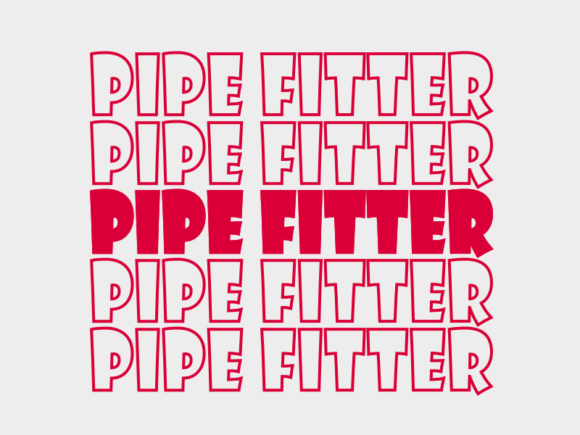
Pipe Fitter SVG Cut File: Graphics for Print Templates
First Impression: Industrial Clarity Meets Editorial Polish
Opening the Pipe Fitter SVG Cut File felt like unboxing a well-engineered tool—clean lines, precise geometry, and an immediate sense of functional authenticity. This isn’t decorative fluff. It’s a graphic design asset rooted in trade realism: wrenches, pipe bends, threaded fittings, and subtle metallic textures rendered with vector precision. The mood is professional yet approachable—neither sterile corporate nor overly playful. It leans into educational, DIY, contractor-focused, and vocational content niches while still supporting modern design sensibilities. Think trusted how-to guide, not stock-photo filler.
Where It Elevates Real Publishing Workflows
I tested Pipe Fitter SVG Cut File across six live publishing touchpoints—and it performed strongest where visual credibility matters most. As a blog designer, I dropped it into:
- Featured images for plumbing, HVAC, or construction affiliate posts—adding instant topical clarity without clutter;
- Pinterest pins for downloadable checklists (“10 Must-Check Pipe Fitting Safety Tips”)—its bold silhouette scaled cleanly to 1000×1500px and held attention amid scroll;
- Digital guides and lead magnets, layered over soft gradients in Canva templates to reinforce subject authority;
- Newsletter headers for trade newsletters—pairing the SVG with bold sans-serif type created strong visual hierarchy;
- Category thumbnails on resource hubs (e.g., “Tools & Techniques”); and
- Social media graphics for LinkedIn carousels explaining material compatibility charts—where technical accuracy in visuals builds reader trust.
Why It Strengthens Content Performance
This isn’t just about prettier pixels. Pipe Fitter SVG Cut File improves measurable editorial outcomes:
- Stronger first impression: Readers scanning a homepage or category archive instantly recognize topic relevance;
- Better click-through potential: On Pinterest and email previews, its distinct shape stands out among generic icons;
- More consistent branding: Used across blog graphics, digital product covers, and media kits, it anchors a cohesive visual identity;
- Improved reader trust: Technical accuracy signals expertise—especially critical for affiliate marketing in skilled trades;
- Clearer visual hierarchy: When placed beside headlines or bullet points, it directs attention without competing with text;
- Stronger category recognition: Repeating the motif across related posts builds intuitive navigation cues.
Best Placement Zones for Maximum Impact
For website owners and digital publishers, Pipe Fitter SVG Cut File shines in these high-visibility spots:
- Hero images above long-form tutorials;
- Article thumbnails in grid-based blog layouts;
- Pinterest pins sized at 2:3 ratio;
- Editorial accents—like corner badges on printable design worksheets;
- Content upgrades such as downloadable PDFs or digital guides;
- Category visuals on resource libraries;
- Newsletter headers that preview upcoming trade tips;
- Social media previews for blog posts or Canva template launches.
Use With Intention—Not Everywhere
Like any strong graphic design asset, Pipe Fitter SVG Cut File requires thoughtful placement. Avoid using it:
- In tiny mobile thumbnails where detail dissolves into noise;
- Over text-dense blog graphics—its structural weight can overwhelm readability;
- Against low-contrast or busy backgrounds (e.g., concrete textures or grungy overlays);
- In serious corporate whitepapers or legal compliance content—its industrial tone may misalign;
- On websites committed to ultra-minimalist design systems where even subtle iconography feels intrusive.
Practical Publisher Notes You’ll Actually Use
Before deploying Pipe Fitter SVG Cut File across your site or digital products, run these checks:
- Preview it on both desktop and mobile—does the scale hold? Does negative space breathe?
- Test it as a thumbnail in your CMS—does the core shape remain legible at 150×150px?
- Drop it into a real blog layout mockup—not just a blank canvas—to assess balance with headlines and body copy.
- Overlay headline text: try bold sans-serif (e.g., Inter), classic serif (e.g., Merriweather), script, and handwritten fonts—note contrast and tone alignment.
- Check grayscale conversion: does it retain definition? Crucial for printables and accessibility.
- Verify file size—SVGs should be under 50KB for fast web performance; compress if needed.
- Confirm commercial license terms—especially for monetized blogs, affiliate pages, or paid digital downloads.
A Scalable Asset for Real Content Needs
This is a Scalable Vector Graphic—meaning you can resize Pipe Fitter SVG Cut File from a 24px favicon to a full-width website header without pixelation or quality loss. Unlike raster files, it adapts natively to Retina displays, dark mode interfaces, and responsive breakpoints. That scalability makes it ideal for cross-platform use: embedded in WordPress headers, exported as PNG for social ads, or imported directly into Cricut Design Space for physical merch. As a digital download, it’s lightweight, editable, and production-ready—no font dependencies or layer locks.
Final Thought for Bloggers and Digital Publishers
If your content lives at the intersection of expertise and audience action—whether you’re building a plumbing education site, launching a contractor newsletter, or designing Canva templates for trade educators—Pipe Fitter SVG Cut File delivers more than decoration. It’s a functional piece of editorial design that quietly reinforces credibility, organizes visual information, and supports content marketing goals. Used intentionally, it becomes part of your brand identity—not just a graphic, but a signal: This content knows what it’s talking about.