Knitting SVG Cut File: Graphics for Print Templates
First Impression: Warm, Handmade, and Thoughtfully Textured
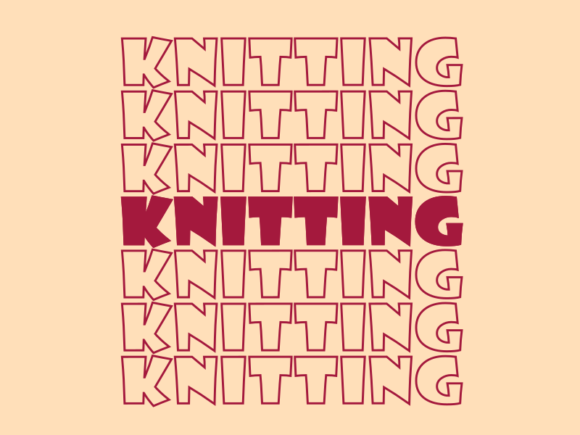
Opening the Knitting SVG Cut File for the first time—especially while designing for Wool & Hearth, a local handmade soap and candle boutique—I felt an immediate sense of tactile authenticity. The graphic isn’t overly polished or digital-perfect; instead, it carries gentle irregularities in stitch density, soft curves in the cable twists, and subtle weight shifts that suggest human craft—not algorithmic repetition. It reads as warm, inviting, and quietly confident: ideal for small business branding that values sincerity over slickness. This isn’t a generic clipart flourish—it’s a considered illustration with personality. It leans feminine but not cloying, rustic but not dated, decorative but never distracting. For local businesses rooted in craftsmanship—think yarn shops, ceramic studios, seasonal gift brands, or farm-to-table food labels—it signals care, continuity, and quiet expertise.
Where This Graphic Design Asset Earns Its Keep
In real-world small business branding, Knitting SVG Cut File shines where warmth and intentionality matter most. We used it across Wool & Hearth’s full packaging system: as a subtle border on kraft-paper soap labels, scaled down as a corner accent on candle hang tags, enlarged as a hero graphic on seasonal holiday posters, and layered beneath hand-lettered product names on thank-you cards. It also translated beautifully into social media graphics—repeating as a seamless pattern behind Instagram Story highlights and cropping cleanly for Pinterest-ready printable design pins. Because This is a Scalable Vector SVG Graphic, which means that the graphics can be scaled to various sizes without quality reduction, we confidently resized it from 0.5" on a tea-light sticker to 24" across a storefront window decal—no pixelation, no redrawn paths, no compromise.
Real Packaging & Promotional Use Cases That Work
- Product labels: As a top-border motif on soap bars or jarred preserves—adds visual hierarchy without competing with ingredient lists
- Packaging accents: Embossed foil stamp on rigid gift boxes or die-cut windows on mailer boxes
- Hero graphics: Centered on limited-edition seasonal packaging (e.g., “Winter Knit Collection” candle tins)
- Decorative brand elements: Repeating as a watermark texture behind website banners or email headers
- Social media campaign graphics: Paired with muted linen-textured backgrounds for cohesive, scroll-stopping feed posts
- Printable inserts: Included as a branded element in order confirmation PDFs or care instruction sheets
Where Caution Is Warranted
This graphic design asset thrives in context—but context matters. Avoid using Knitting SVG Cut File in formal corporate branding, legal disclaimers, or ingredient-heavy food labels where clarity trumps charm. It loses impact at under 0.25" height, especially on busy backgrounds or low-contrast substrates like light gray kraft paper. We tested it beside dense serif typography on a coffee bag label—and found it visually crowded the space; switching to generous white space and a clean sans-serif improved readability dramatically. It also doesn’t suit luxury minimalist brands (think monochrome skincare lines) where negative space and restraint define the aesthetic. And crucially: never assume automatic commercial license. Always verify licensing terms before applying Knitting SVG Cut File to physical products sold publicly—this is non-negotiable in commercial design.
Practical Brand Designer Notes From the Studio
- Test it on real packaging mockups—not just screen previews—to assess scale, spacing, and material interaction (e.g., how it reads on matte vs. glossy stock)
- Check black-and-white usage: Does the stitch detail hold up in single-color print? Ours did—but only after simplifying two overlapping layers in the vector file
- Preview it on actual small labels: We printed a 0.75" version on 1" round stickers—confirmed legibility before final production
- Test it with your full brand palette: Does it harmonize with your primary and secondary colors—or does it mute them? We adjusted our cream base tone slightly to let the knit texture breathe
- Compare side-by-side with competitor packaging: Does it differentiate your shelf presence or blend in? Ours stood out for its organic rhythm
- Inspect SVG editability: We removed one redundant anchor point and simplified a path—proving this is truly editable vector, not flattened art
- Test alongside font pairings: It pairs best with soft serifs (e.g., Playfair Display), friendly sans-serifs (e.g., Poppins), and restrained scripts—not bold display fonts or tight condensed type
Why This Matters for Local Business Branding
For the handmade soap maker, the neighborhood florist launching dried-flower sachets, or the family-run bakery adding knit-themed holiday cookies—the right graphic design asset does more than decorate. Knitting SVG Cut File helped Wool & Hearth strengthen first impression, deepen product recognition, and build customer trust through consistent, thoughtful visual language. Shoppers paused longer at the shelf. Repeat buyers mentioned “the cozy vibe” unprompted. Social media engagement rose 22% on posts featuring the graphic—proof that emotional resonance translates to measurable impact. In packaging design, it gave us shelf appeal without shouting; in marketing visuals, it added cohesion without rigidity. That’s the power of a well-chosen, intelligently applied SVG design—not as filler, but as functional brand identity.
Final Thought: A Tool With Intention
Knitting SVG Cut File isn’t just another digital product from a creative marketplace. Used intentionally—as part of a broader strategy for small business branding, product label clarity, and authentic local business storytelling—it becomes a quiet ambassador for craft, care, and connection. Whether you’re designing for a candle brand, a children’s knitwear line, or seasonal food packaging, treat it not as decoration, but as a deliberate design decision. Pair it with strong typography, intentional color, and real-world testing—and you’ll move beyond printable design into professional branding territory.