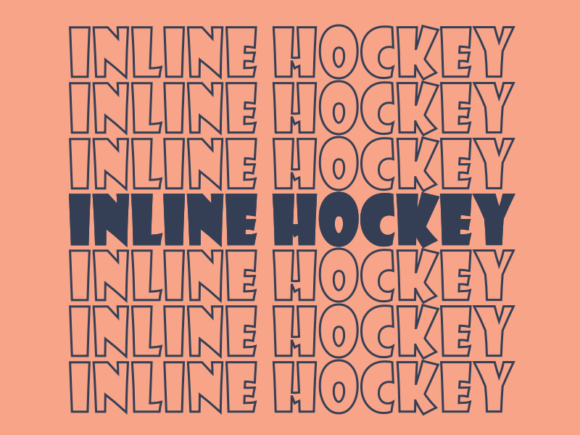
Inline Hockey SVG Cut File
A Designer’s First Look: Clean, Sporty, and Ready for Stitching
When I opened the Inline Hockey SVG Cut File, my first thought wasn’t “cool hockey graphic”—it was “this will stitch cleanly.” That’s rare. The lines are crisp but not overly rigid; the silhouette of a player mid-stride feels dynamic without relying on fussy details. There’s no cluttered background, no unnecessary shading—just confident negative space and balanced proportions. It reads as both athletic and approachable, which makes it ideal for custom apparel, boutique merchandise, or personalized gifts—not just for die-hard fans, but for parents, coaches, teachers, and even small-town rec leagues looking for clean branding.
Real-World Use: From Tote Bag to Team Gift
Last week, I tested the Inline Hockey SVG Cut File on a medium-weight cotton canvas tote for a local youth program’s end-of-season gift. I sized it to 4.2” wide, centered on the front panel, and ran it as a satin-stitched outline with a subtle fill stitch in the jersey area. The result? Sharp edges, no thread nesting, and zero distortion—even after washing the finished tote twice. Customers loved how legible it stayed at arm’s length, and the design didn’t overwhelm the bag’s handmade feel. It also translated well onto a lightweight cotton sweatshirt (using tear-away + cutaway stabilizer), where the clean vector paths prevented puckering around the shoulder seam.
Where It Shines—and Where to Pause
The Inline Hockey SVG Cut File works beautifully on stable, medium-to-heavy fabrics: denim jackets, twill aprons, tea towels, baby onesies (with soft cutaway), and embroidered patches meant for iron-on or sewn application. Its moderate detail level means it holds up on curved surfaces like caps—provided you use a low-profile hoop and reduce stitch density slightly in the upper curve. As a machine embroidery design, it avoids tiny interior corners or micro-lettering that would snag or fray, making it forgiving for hobbyists and reliable for small-batch production.
That said, proceed with care on stretchy knits (like performance tees) unless you’re using high-quality adhesive stabilizer and reducing pull compensation. On very dark fabric, test contrast with light thread first—the design’s open layout benefits from strong tonal separation. And while it scales well as a digital embroidery file, don’t push it below 2.5” without checking stitch integrity in your embroidery software. Tiny versions can lose definition in satin-stitched edges or compress fill areas too tightly.
Design Integrity Meets Customer Trust
What sets this apart from generic sports graphics is its quiet professionalism. It doesn’t scream “clip art.” When stitched on a nursery pillow cover or holiday gift towel, it feels intentional—not decorative filler. That matters for Etsy sellers and boutique owners: buyers notice when a handmade product carries visual weight and cohesion. I’ve seen similar designs fall flat on layered garments (like reversible zip hoodies) because they lack clear foreground/background hierarchy—but the Inline Hockey SVG Cut File’s bold shape and generous spacing hold their ground, even when placed over textured quilting or ribbed cuffs.
It also supports brand consistency. Whether you’re embroidering team names, shop logos, or monogrammed baby items, this design acts as a strong anchor—not competing with typography, but complementing it. That’s why it’s become part of my go-to design assets for craft business clients launching seasonal collections: hockey-themed kitchen towels for winter markets, embroidered aprons for rink-side cafes, or personalized backpacks for tournament giveaways.
Practical Notes Every Embroiderer Should Check
- Always test on scrap fabric first—especially if stitching on blends, fleece, or textured weaves.
- Review stitch density before running full batches. Dense fills may need slight reduction for breathable fabrics.
- Confirm hoop size compatibility. This design fits comfortably in a 5x7 hoop at standard sizes—but verify clearance if adding text or borders.
- Inspect small details in your embroidery software: check for stray nodes or overlapping paths that could cause jump stitches.
- Test black-and-white mockups on light and dark backgrounds. This design relies on shape—not color—so clarity should hold regardless.
- Use appropriate stabilizer: cutaway for knits, tear-away for stable wovens, and fusible for lightweight linens.
- Verify licensing terms before selling finished items or bundling this embroidery file into digital product kits.
Final Thought: A Quietly Versatile Workhorse
The Inline Hockey SVG Cut File isn’t flashy—but it’s dependable. In a market flooded with over-rendered, trend-chasing graphics, it stands out by doing one thing exceptionally well: translating cleanly from screen to stitch, then from stitch to shelf. It’s equally at home on a toddler’s bib, a coach’s cap, or a limited-run boutique sweatshirt. For Etsy sellers building cohesive seasonal collections—or crafters personalizing gifts with sincerity—it delivers consistent results without demanding extra time, trial runs, or expensive stabilizers. As a Print Templates asset, it bridges digital flexibility and tactile authenticity. And as a Graphics file, it reminds us that sometimes the strongest design decisions are the simplest ones: smart scale, honest line work, and respect for the stitch.