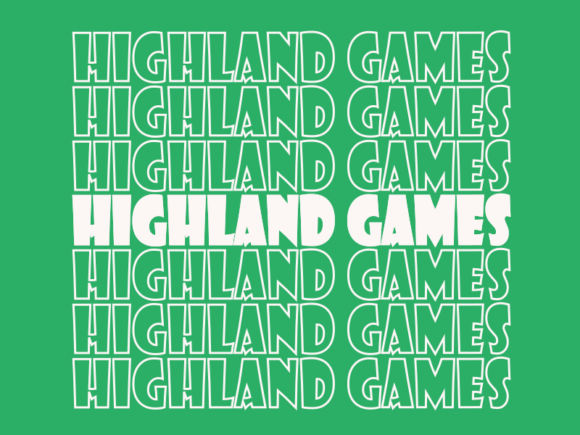
Highland Games SVG Cut File
A Designer’s First Look: Bold, Nostalgic, and Ready for Stitching
When I opened Highland Games Svg Cut File, I didn’t just see vector lines—I saw a story waiting to be stitched. The design carries that unmistakable Scottish pride: interlocking Celtic knots, stylized caber toss silhouettes, maybe a subtle thistle or tartan stripe woven into the negative space. It’s not overly ornate, but it’s intentional—clean enough for crisp satin stitch edges, detailed enough to read at 3 inches wide on a sweatshirt chest, and balanced enough to hold visual weight without overwhelming a garment or home good.
Where This Design Truly Shines (Real Projects That Just *Work*)
Last week, I prepped a batch of custom embroidered tote bags for a local Highland Games festival vendor. I chose Highland Games Svg Cut File as the centerpiece—centered on the front panel, sized to 4.25" wide—and it landed perfectly. Not too busy for a functional bag, not too sparse to feel like filler. The vector clarity translated directly into clean embroidery: sharp corners held up in fill stitch, curves stayed smooth in satin stitch, and the overall silhouette read clearly even from across a crowded craft fair aisle.
It’s equally effective on baby onesies (scaled down to 2.5"), aprons for Scottish-themed bakeries, tea towels for holiday markets, and even small embroidered patches for kilt pins or clan society merch. As a print template, it also works beautifully as a digital embroidery file base—layer it with monogram initials, add a subtle running stitch border, or pair it with coordinating graphics for a cohesive boutique collection. Etsy sellers will appreciate how instantly recognizable and culturally resonant it feels—no explanation needed, just quiet confidence in the motif.
Where to Pause and Plan Ahead
This isn’t a “drop-in-and-stitch” design for every surface. On thin or stretchy fabric—like lightweight cotton tees or ribbed knit caps—the outer contours can distort if stabilizer isn’t layered thoughtfully. I tested it on a curved baseball cap front, and while the shape held, the tightest inner curves (especially around small knot details) needed a light tear-away + cut-away combo to prevent puckering. On dark fabrics, avoid light thread unless you’re aiming for subtlety—this design gains presence with contrast.
Also: check your hoop size before digitizing. The original SVG scales infinitely, but real-world embroidery requires thoughtful sizing. At under 2", fine details like tiny thistle leaves may lose legibility in dense fill stitch; at over 5.5", stitch density can balloon unexpectedly unless adjusted manually. And if you're planning applique design work, confirm whether the SVG includes separate layers for base fabric, fusible, and top stitch—this version doesn’t specify, so treat it as a single-layer embroidery file unless further assets are provided.
What Your Customers Will Actually Notice
People don’t buy “SVG files.” They buy heirloom-quality baby blankets, personalized gifts with meaning, custom apparel that sparks conversation, and small shop products that feel intentionally made—not mass-produced. Highland Games Svg Cut File supports all of that when used with care. Its visual personality builds trust: it says “I know this tradition,” not “I found a clipart pack.” That authenticity lifts perceived value—whether it’s stitched on a $95 linen pillow cover or a $28 embroidered patch sold at a Highland Games booth.
But here’s what matters more than aesthetics: consistency. When repeated across tote bags, sweatshirt embroidery, and nursery decor, this design anchors a brand. It reads as part of a family of design assets, not a one-off. That cohesion is gold for creative entrepreneurs building a recognizable craft business.
Practical Notes Every Embroidery Designer Should Run Through
- Always test first—on scrap fabric matching your final product’s weight and stretch.
- Check thread color contrast before stitching a dozen items—what reads well on screen may vanish on navy twill.
- Review stitch density in your embroidery software—dense fills may need reduced density or alternate stitch types for breathable fabrics.
- Confirm hoop size compatibility—don’t assume it fits your smallest hoop without scaling verification.
- Inspect small details at actual stitch size—tiny lettering or knotwork may need manual cleanup for clarity.
- Test black-and-white mockups to gauge visual impact without color distraction.
- Compare light vs. dark fabric backgrounds—some elements gain or lose emphasis depending on contrast.
- Use proper stabilizer—especially for textured fabrics like terry cloth or bouclé, where stitch definition blurs easily.
- Verify licensing before selling finished items or bundling as digital product—this is a graphics file, not automatically commercial-use licensed.
Final Thought: A Thoughtful Tool, Not a Magic Button
Highland Games Svg Cut File won’t replace your design judgment—but it does reward it. It’s the kind of machine embroidery design that elevates a simple tote bag into a meaningful souvenir, turns a baby embroidery project into a keepsake, and gives a small shop product instant cultural resonance. Used with intention—as part of a larger embroidery project, paired with smart fabric choices and tested execution—it becomes more than decoration. It becomes connection. And that’s what handmade product value is really built on.