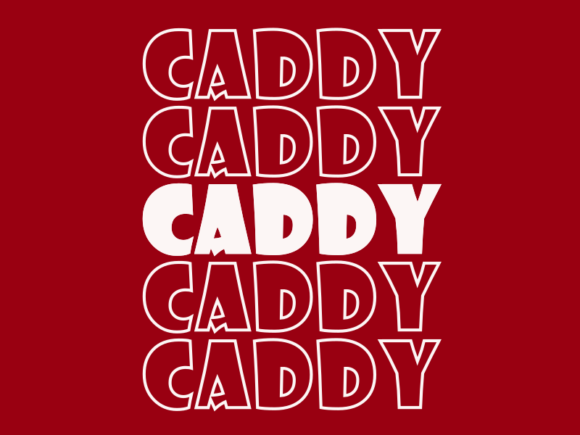
Caddy SVG Cut File: Graphics for Print Templates
First Impressions: A Warm, Handcrafted Vibe with Clear Brand Potential
Opening the Caddy SVG Cut File felt like unboxing a well-curated design tool—clean, intentional, and immediately usable. As a brand designer who’s built identities for local bakeries, herbal skincare studios, and handmade candle makers, I looked first at mood and fit. This graphic leans into soft curves, balanced negative space, and a subtle organic rhythm—neither overly ornate nor starkly minimal. It reads as approachable yet polished: think “locally loved, thoughtfully made.” It suits brands that want warmth without cliché—ideal for a small-batch coffee roaster launching seasonal bags, a botanical soap line designing elegant hang tags, or a children’s toy boutique crafting playful but refined packaging.
Where It Shines in Real Local Business Branding
The strength of Caddy SVG Cut File lies in its versatility across touchpoints—not just as decoration, but as functional brand reinforcement. In product label design, it works beautifully as a frame around flavor names or scent notes, adding visual hierarchy without overwhelming the core message. For packaging design, I’ve used it as a die-cut accent on kraft boxes for a honey brand—cutting cleanly on a Silhouette Cameo and holding crisp detail even at 1.5 inches tall. On thank-you cards and printable inserts, it elevates perceived value instantly; customers notice the care in execution. As social media graphics, it anchors Instagram carousels for new product launches—scaled up for banners, simplified for story stickers. And in seasonal campaigns (think holiday gift sets or spring collections), it adapts effortlessly: pair it with muted sage greens for a wellness brand or terracotta and cream for a Southwest-inspired food business.
How It Strengthens Small Business Presentation
- Stronger first impression: When placed on a matte-finish candle jar or linen tea bag, Caddy SVG Cut File signals intentionality—not DIY haste.
- Better product recognition: Used consistently across labels, stickers, and website banners, it becomes a quiet signature—like a visual whisper customers begin to associate with your shop.
- Clearer visual hierarchy: Its balanced weight and open structure guide the eye toward key copy—perfect when you need “Small-Batch • Hand-Poured • Made in Portland” to land first.
- More consistent brand identity: Because it’s a vector graphic, scaling from 0.75" sticker to 24" window decal introduces zero distortion—critical for cohesive local business branding.
- Improved customer trust: Professional packaging design, anchored by assets like this, tells shoppers you respect their attention—and their purchase.
Best Uses: Contexts Where Caddy SVG Cut File Delivers Highest ROI
This graphic design asset performs best where charm meets clarity. Use it as a hero graphic on front-of-pack for artisanal food labels. Apply it as a decorative border on boutique business cards or price lists. Integrate it into product mockups for Etsy listings—its clean lines render flawlessly in lifestyle photos. It’s especially effective in seasonal packaging (e.g., wreath-shaped accents for winter collections) and as a subtle watermark on printable design elements like recipe cards or care instructions. For social media managers, it’s a fast way to unify campaign visuals—layer it over flat lays or use it as a framing device for UGC reposts.
Use With Care: Situations That Demand Strategic Editing
While flexible, Caddy SVG Cut File isn’t universal. Avoid dropping it into formal corporate branding—it lacks the austerity needed for law firms or financial advisors. Steer clear on very small labels (under 0.5") unless simplified first; fine interior details may blur in print. Don’t force it onto crowded packaging layouts where ingredient lists or certifications dominate—here, it competes rather than complements. Skip low-contrast backgrounds (e.g., light gray on off-white); test contrast rigorously. Luxury minimalist brands may find its gentle personality too expressive. And never place it where decoration risks obscuring legal text, barcodes, or safety icons.
Practical Brand Designer Notes Before You Implement
Before locking Caddy SVG Cut File into final files, run these checks: Test it on real packaging mockups—not just digital previews—to assess scale and proportion. Print a black-and-white version to verify legibility and tonal balance. Preview it at actual label size on your chosen material (kraft paper vs. glossy sticker stock behaves differently). Layer it over your brand palette—does it harmonize with your primary typeface? Try it beside serif (for elegance), sans serif (for modernity), script (for warmth), and handwritten fonts (for authenticity). Inspect the SVG layers—if editing is needed (removing strokes, adjusting anchor points), confirm the file is truly vector-editable in Illustrator or Affinity Designer. Check PNG transparency if exporting for web use. Finally, verify commercial licensing: this is essential for client work, physical product sales, or any use beyond personal projects. As a graphic design asset, its value multiplies only when legally cleared for commercial design and small business branding.
Final Thought: A Thoughtful Tool, Not a Shortcut
Caddy SVG Cut File won’t replace thoughtful brand strategy—but in the hands of a local business owner or creative entrepreneur, it’s a quietly powerful accelerator. It bridges the gap between “I have a great idea” and “I look like a brand people trust.” Whether you’re a food business updating jar labels, a handmade seller prepping for craft fair season, or a marketer building cohesive social media graphics, this is a scalable, adaptable, professional-grade piece of the puzzle. Used intentionally—as part of a larger system of typography, color, and voice—it supports stronger packaging design, clearer product labels, and more resonant marketing visuals. That’s not just design efficiency. That’s local business credibility, delivered.