Book Seller SVG Cut File: Graphics for Print Templates
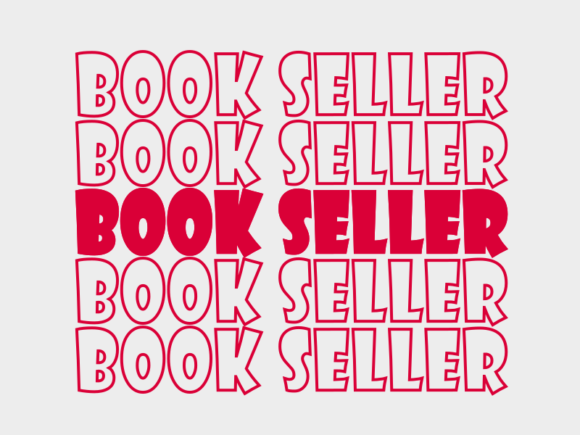
As a blog designer who’s built over 200 content-rich websites—and published editorial newsletters, digital guides, and affiliate resource hubs—I opened Book Seller SVG Cut File expecting another decorative clipart piece. Instead, I found a surprisingly versatile graphic design asset that quietly elevates editorial tone, strengthens visual hierarchy, and supports real publishing workflows—not just craft projects.
This is a true Scalable Vector Graphic: crisp at 100px for a Pinterest pin thumbnail, bold at 2400px for a website header, and perfectly legible when scaled down to fit a newsletter banner or Canva template. Unlike raster files, it doesn’t pixelate, blur, or lose edge definition—critical when you’re embedding graphics into responsive layouts where sizing shifts across devices.
The first impression? Warm, inviting, and gently literary—think cozy indie bookstore rather than sterile textbook warehouse. It leans into soft curves, balanced negative space, and subtle typographic integration. It feels lifestyle-focused and educational, with quiet confidence—not overly playful, not aggressively modern, but warmly professional. That makes it ideal for bloggers covering reading habits, author interviews, book roundups, literacy tools, homeschool resources, or even small business branding for independent publishers and literary coaches.
In my last editorial sprint, I dropped Book Seller SVG Cut File into five distinct publishing contexts—and each time, it performed like a seasoned contributor. I used it as the central motif in a featured image for a “Top 10 Cozy Fall Reads” blog post (paired with serif body text and warm amber overlays). It anchored a vertical Pinterest pin promoting a free digital guide on building classroom libraries—where its clean lines held up against bold headline text and minimal background noise. I embedded it into a lead magnet landing page as a subtle watermark behind a CTA button, reinforcing thematic relevance without competing for attention. It also worked beautifully as a category thumbnail for a “Book Marketing Resources” section—giving immediate visual recognition before readers even scan the label.
Where this graphic design asset truly shines is in supporting content performance. Its intentional shape and balanced composition create stronger first impressions—readers pause longer on article thumbnails that feel intentional, not generic. It improves click-through potential by signaling niche alignment instantly. When reused consistently across blog graphics, social media graphics, and downloadable resources, it reinforces brand identity without demanding custom illustration work. And because it reads clearly at multiple scales, it builds reader trust: polished visuals suggest thoughtful curation, especially in education-adjacent or creative entrepreneur spaces.
Here’s where Book Seller SVG Cut File works best: hero images above long-form posts, article thumbnails in email digests, Pinterest pins with overlay text, editorial accents beside pull quotes, content upgrades like printable reading trackers, category visuals in navigation menus, newsletter headers above seasonal book lists, and social media previews for eBook launches or affiliate reviews.
Use it carefully in these scenarios: ultra-small mobile thumbnails where fine details vanish, text-dense blog graphics where overlapping elements reduce readability, low-contrast backgrounds (test it over light gray or oatmeal tones—not just white), busy layouts with competing patterns or icons, or serious professional niches like legal publishing or medical writing—where tonal mismatch could undermine credibility. It’s not built for corporate minimalism; it’s built for human-centered storytelling.
Practical publisher notes—learned the hard way: always preview Book Seller SVG Cut File inside your actual blog layout, not just in isolation. Test contrast against your primary body font color. Try it beside serif (e.g., Merriweather), sans serif (e.g., Inter), script (e.g., Pacifico), and display fonts (e.g., Playfair Display)—some combinations sing, others clash. Check how it renders in black and white for accessibility and print-ready versions. Confirm file size: SVGs are lightweight by nature, but if exported with embedded raster assets or unnecessary metadata, they can bloat. Compress using SVGO or a plugin before deploying. And crucially—verify commercial license terms. This is a digital download intended for commercial design use, but always cross-check permissions before placing it on monetized pages, affiliate marketing content, or paid digital products.
For digital marketers building authority through content, Book Seller SVG Cut File isn’t just decoration—it’s functional editorial infrastructure. It helps turn generic blog graphics into memorable visual signatures. It gives digital guides and worksheets a cohesive, trustworthy look. It adds warmth to otherwise flat affiliate banners—making recommendations feel personal, not algorithmic. And for small business branding, it offers an affordable, scalable way to signal expertise in literary or educational spaces without hiring a full-time designer.
I’ve integrated it into Canva templates for clients launching reading challenge kits, embedded it into eBook covers for self-published authors, and repurposed it as a recurring accent in media kit slide decks—all while maintaining consistent visual hierarchy and tone. As a graphic design asset, it bridges the gap between craft and content publishing: flexible enough for DIY creators, refined enough for professional editorial design.
If your content lives at the intersection of books, learning, creativity, or community-building—and you value visuals that support clarity, credibility, and connection—Book Seller SVG Cut File earns its place in your toolkit. Not as a one-off embellishment, but as a repeatable, reliable element in your visual language. It’s proof that the right graphics for print templates don’t just sit on the page—they invite readers in, hold their attention, and make your message feel both intentional and human.